Monday, August 2, 2010

On vacation.


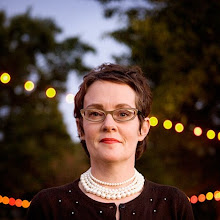
photo by Kevin J. Miyazaki.

I'm on vacation this week--well, faux vacation, since I've got to finish my essay for the Ahmet Ogut show I'm organizing this October, and working on the 4000 level course I'm teaching at the University of Missouri-St. Louis starting at the end of the month.


still from Baraboo from inside Kathy & Duane's kitchen.

But still, I'm in Milwaukee with Kevin and pals and enjoying working at home in casual clothes. We've already had dinner outside at a friend's house and watched the movie Baraboo and attended the JACL (Japanese American Citizen's League) picnic (with bingo sharks in the group).


fruit tart for JACL picnic
.

This is a great time to reflect on all the changes of the past year--and to think about all the changes to come in my second year at Laumeier Sculpture Park.

Happy August to all you Leos in the crowd!

Saturday, July 24, 2010

St. Louis Weekend, part III


CAMP on Cherokee Street. all pictures courtesy the author.


Last weekend was the 5th Annual City-Wide Open Studios program organized by the Contemporary Art Museum, St. Louis. With 155 artists / locations / organizations open Saturday or Sunday, visitors can get an interesting sense of the dynamic emerging arts community in St. Louis.


Lindsey Scott work / collaboration at C.A.M.P.


I chose Saturday as my day of braving Phoenix-like weather (estimated 105 heat index) and started on Cherokee Street, an historical, beat-up South City street with families eating Mexican food outside under small umbrellas (a nostalgic Phoenix moment), kids hanging around in a grocery store run by a Somali family and young African American guys with their shirts off amidst shoppers enjoying the street.

The co-op non-profit gallery / art space C.A.M.P. gives classes to neighborhood kids, has two artists-in-residence and hosts community meetings. I particularly liked the mountain made of fabric, including what appeared to be socks turned inside-out.

I ran into artist Bridget Kraft (I bought one of her knit hats on a decidedly colder day), who makes lovely formal landscapes out of fabric.


Bridget Kraft installation at C.A.M.P.

Next Firecracker Press, great atmosphere, love the pillows (more pillows!) Visited with artist Marie Oberkirsch, who has a studio downstairs and does great purses.


Firecracker Press.


"Cafe" (no coffee) at Luminary Arts.

Next stop, The Luminary Center for the Arts, founded by artists Brie and husband James. They bought / rent the building, a former religious school, and converted the cells / bedrooms into small studios for artists.

I liked this video by Brian De Pauli, whose beer-can beating protagonist recalled the struggles William Kentridge's characters suffer in his operatic works. Somehow dealing with personal demons feels right in this context.


Brian De Pauli video.

Even this small slice of artistic output in St. Louis was fun to taste--this is a vibrant, smart community that demonstrates when artists stick around after school, things happen.

Monday, July 12, 2010

Along the Missouri


Lewis & Clark statue in Seaside, OR. pictures courtesy the author

I just spent a few days in Cannon Beach, Oregon, at the Miyazaki family reunion--what a glory to have cool nights, a beach and bonfire at your front door.

In addition to relaxing, groups dinners, sand castles and a rain forest hike, we did some touring around to Seaside, OR, where I found the statue above. Lewis & Clark wintered in the area in 1805, camping, uninvited, on Clatsop nation land just south of what is now Astoria, OR.


Fort Clatsup, OR.

In addition to this lovely recreation of L & C's fort, there were great educational programs. A park ranger, dressed as a 19th century fur trapper, played a game of "telephone" with five volunteers to show how tough negotiating was for the Americans--they went from English to French to Hidatsu to Shoshone to Clatsup to trade one horse.

A brief film presented the Corps' presence from the side of the Clatsup--one of the chief's descendants played a role, and another woman talked about the misunderstandings, the thefts, the conflicting social rules.

Missed translations, beginning and ending of empires--it all seems so current.

Tuesday, June 15, 2010

Doing the People's Work


Inside the Renwick Gallery. all photos courtesy the author.

I'm just wrapping up a day in D.C. doing the people's business. I've gone through jury duty twice recently--both in Phoenix, oddly enough--but I never get on the jury. Perhaps being of a certain age gives you both knowledge and baggage that could be compromising in that kind of context?

But when I review proposals for the National Endowment for the Arts, the Institute of Museum and Library Services, a state or city arts organization, I feel I am contributing my expertise to the benefit of public culture. Given the intelligent level of discussion that goes on in D.C. with regards to our field, I feel proud of my professional colleagues and the hard-working staff at our nation's agencies.


Romaine Brooks, Self-Portrait, 1923

The secondary benefit, of course, to being in D.C. is to experience more art. Yesterday's menu: The Renwick Gallery, the International Spy Museum and the National Building Museum.

The Renwick had a great show The Art of Gaman: Arts and Crafts from the Japanese American Internment Camps, 1942-1946. Sadly the catalogue was sold out, but there were some lovely gems in the show, including a work by Noguchi (not made while he was in camp). Noguchi was outside the affected zone for internment, but the US government suggested he go into the camps willingly to demonstrate that the camps weren't bad. Noguchi was assured he could leave when he wanted to, but when he asked to be released, they kept him inside.

Next was the International Spy Museum. I learned that the Renaissance architect Leon Battista Alberti invented the cipher disc which has been used for centuries to encode messages. See how an artist's unique training can generate something used for good (and bad of course)?

Finally a stop at the National Building Museum for a show about the architecture of parking ramps, a necessary modern evil. Given that America is grappling with the problem of automobiles, after conquering this unruly country through its use, we should see parking ramps as a soon-to-be-relic. A thousand years from now, archaeologists will wonder what we worshiped in these temples.

In any case, what I take away from these few days in D.C. is that, from its beginning, this country saw the arts as an important part of its self-definition--look at the variety of organizations one can visit in an afternoon. It is also noteworthy that museums are willing to take on an episode as shameful as the jailing of American citizens due to prejudice and fear. That is the democratic voice expressed through objects.

It is clear, however, that we are at a crossroads in describing the arts' value in and to civil society. We in the non-profit arts need to reaffirm the value we have in light of permanently diminished funding by re-imagining, as artists do, what the democratic ideal can be.

Monday, May 24, 2010

Hawk on Havel


Hawk on top of work by Joe Havel, May 2010.
all photos, unless otherwise noted, are by the author.

One of the dilemmas we've debated at Laumeier is how to explain to the public that a bird can sit on a sculpture, but they can't. Since scolding doesn't seem to work, what new language do we use to get dog-walkers and babysitters not to damage the art?


detail of Laumeier's new limited edition t-shirt.

My initial idea of a t-shirt that said "you break it, you buy it" didn't fly with staff, so we modified our ideas and are just coming out with our first limited edition t-shirt (check our website soon to order yours!)

To address this issue of art safety (damage to surfaces, breaking parts) and public (falling off tall objects, breaking bones) safety, and the needs for interpreting the collection and why we exist, we've just finished Phase I of our Wayfinding Iniative.

This has been an incredibly fast-paced program, spear-headed by Mike Venso, Laumeier's pr and marketing director, who wrote his UMSL exit paper on Wayfinding at Laumeier. But the program never would have happened without good friend Patrick Castro, of LP/w Design Studios, Milwaukee, who offered his amazing design talents to help us communicate directly to our public.


Wayfinding kiosk. photo by Mike Venso.

In the four sides of the kiosks, we have written to "Place" (above); "Welcome", which talks about our supporters and how we got here; "Respect", or why we ask you not to touch; and "Explore", where you find a nice big map for orientation. The kiosks have been an incredible change in how audiences can use the park.

We are gearing up to complete the blind maquettes (with support from Lighthouse for the Blind), and will shortly begin working on a narrative arc for the park.

This will take time, but in the meantime, that hawk and its mate have great perches on top of our art!

Wednesday, April 28, 2010

St. Louis Weekend, part II


Budweiser sign at Anheuser-Busch plant. All images courtesy the author.

Another wacky weekend in the Lou.

Diane and I visited all kinds of new places in town last weekend, with interesting and unintended consequences.

Before you judge us for going to the A-B plant, ask your arty self: why not? We saw some lovely aesthetic things, things you would never see in a business plant today. Draft horses, round buildings with stained glass windows, historic brick buildings made to school the worker's kids. An interesting lesson for corporate responsibility? I know the logic came from somewhere else, but still, an intriguing comparison.


A-B bottling building.


Horse and dog art.


Diane being from Milwaukee there was the inevitable check list comparing the A-B tour to the Miller tour. Points off A-B: not enough information about St. Louis and its relationship to A-B, limited sampling tastes--Milwaukee knows its audience!--they tried to give our tour group the bum's rush to accommodate the next group. Diane and I have pledged to try the Miller tour soon to fill in these blanks.


Diane at player piano.

Then off to the Scott Joplin House, where he lived for two or four years. Player piano was not his. None of the furniture, decorations, player rolls were his. Sad that such an important figure was so little preserved! (Perhaps the syphyllis had something to do with it?)


Diane at Tado Ando pool at Pulitzer Foundation.


Turtle at Laumeier.

After the terrible rainstorm (I swear we saw part of the tornado that touched down in University City), we drove to Laumeier where the air was clear and the animals were out. What bizarre sounds emanated from the fountain by Trova Woods!


Tree down.


Proof of the tornado that hit U-City. This tree was across the street from my house, and made a surreal end to a fun day.

Friday, April 23, 2010

St. Louis Weekend


Nicolas Point, Altar in a Tipi, c. 1841-47, watercolor on paper, Saint Louis University Art Museum. All pictures courtesy the author.

Kevin and I spent last Saturday visiting places new to us.

First stop were the galleries at St. Louis University Museum of Art and the show Crossing the Divide: Jesuits on the American Frontier. The quirky, Romanesque (I mean the period of art history) diary drawings by Jesuit Nicolas Point captured moments of great humor and great horror as the indigenous peoples of North America were slowly being surrounded by settlers. Point showed a great deal of bathos towards his tutors / charges of the various Native Nations.

The image above, of an altar in a tipi, shows the Jesuit's efforts to integrate Catholicism into local conditions. I think the simplicity of the tipi's triangle is nicely menaced by the smoke plume to the right (not mentioned in Point's notes).


Interior of Cathedral Basilica St. Louis.

Carrying along our religious theme we stopped at the Cathedral Basilica St. Louis, a lovely early 20th century church that is super-loaded with Byzantine-style mosaics. Kevin pointed how how the wall labels explained how the master mosaic mason--he--would do the work.

The pictures were all of female artisans though, a funny twist to the authoritarian text. Still, I loved the light that played between the walls of the space.


Painting by Dhruvi Acharya, Webster University.

Next on to Webster University to see Bring Me a Lion, a show of contemporary Indian art. In the typically small university art space was a densely-packed exhibition of great ambition but sadly without enough air to breathe--I vote for more space for the gallery! Still, what a great opportunity for the students, good for the faculty that fights for this educational program.

I particularly liked the works by Dhruvi Acharya, her comic-book bubbles puckering and blistering the mottled, skin-like surface of her paintings with terse observations and pleading requests.


Kevin at Riddles before the fights broke out.

After seeing the movie Greenberg at the Tivoli--save yourself grief and money, skip that mess--we walked across the street to Riddle's for dinner. The entire street was alive mostly with teenagers, who broke into a few fights while we were out. Like kids around the globe, they need more things to do at night to let their energy out!

A great day in St. Louis, which continues to unfold with surprising pockets of culture that speak to the histories that have formed this place.